

自動式拋丸機:不銹鋼噴砂與拋丸區別對比
在不銹鋼設備加工的表面處理環節,噴砂與拋丸是應用廣泛的兩種核心工藝,二者通過不同的工作原理實現表面清潔、強化或改性效果,適用于不同場景需求。以下從核心維度展開詳細對比,為工藝選擇提供參考:
Sandblasting and shot blasting are two widely used core processes in the surface treatment of stainless steel equipment. They achieve surface cleaning, strengthening, or modification effects through different working principles and are suitable for different scene requirements. The following provides a detailed comparison from the core dimensions to provide reference for process selection:
一、工藝原理核心差異
1、 Core differences in process principles
?噴砂:以壓縮空氣或離心力為動力,驅動氧化鋁、玻璃珠等磨料高速(30-50m/s)沖擊不銹鋼表面,通過物理撞擊實現雜質清除與毛化處理。
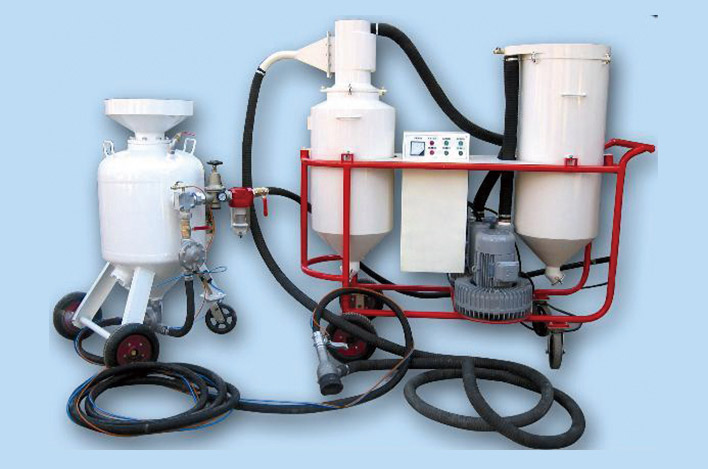
Sandblasting: Driven by compressed air or centrifugal force, abrasives such as alumina and glass beads are used to impact the surface of stainless steel at high speeds (30-50m/s), achieving impurity removal and roughening treatment through physical impact.
?拋丸:借助高速旋轉的離心式葉輪,將鋼丸等彈丸加速至60-110m/s拋向工件,憑借更強的動能完成表面處理。
Shot blasting: With the help of a high-speed rotating centrifugal impeller, steel balls and other pellets are accelerated to 60-110m/s and thrown towards the workpiece, completing surface treatment with stronger kinetic energy.
二、核心優缺點對比
2、 Comparison of core advantages and disadvantages
(一)噴砂工藝
(1) Sandblasting process
優點:
Advantages:
1.精細可控:可精準調節表面粗糙度(0.1~10μm),形成均勻啞光或拉絲質感,適配裝飾性需求。
1. Fine and controllable: The surface roughness can be precisely adjusted (0.1~10 μ m) to form a uniform matte or brushed texture, suitable for decorative needs.
2.適配性廣:能處理復雜形狀、薄壁件及非金屬基材,避免工件變形,適合局部或小批量作業。
2. Wide adaptability: capable of handling complex shapes, thin-walled parts, and non-metallic substrates, avoiding workpiece deformation, suitable for local or small batch operations.
3.功能實用:磨砂表面防滑抗指紋、易清潔,且能提升后續涂層附著力,常用于醫療設備、裝飾幕墻等場景。
3. Practical function: The frosted surface is anti slip, anti fingerprint, easy to clean, and can improve the adhesion of subsequent coatings. It is commonly used in medical equipment, decorative curtain walls, and other scenarios.
4.環保可選:濕式噴砂可減少粉塵污染,改善作業環境。
4. Environmental optional: Wet sandblasting can reduce dust pollution and improve the working environment.
缺點:
Disadvantages:
1.效率較低:多為手動或半自動作業,處理速度遠低于拋丸,不適合大批量生產。
1. Low efficiency: mostly manual or semi-automatic operation, with processing speed much lower than shot blasting, not suitable for mass production.
2.成本較高:磨料消耗量大、回收利用率低,長期運行成本高于拋丸。
2. High cost: high abrasive consumption, low recycling rate, and long-term operating costs higher than shot blasting.
3.局限性明顯:無法提升表面光澤度,耐腐蝕性略低于鏡面處理,且對厚氧化皮清除能力有限。
3. Obvious limitations: unable to improve surface glossiness, slightly lower corrosion resistance than mirror treatment, and limited ability to remove thick oxide skin.
4.環境要求高:開放式作業粉塵較多,需配套強力除塵設備。
4. High environmental requirements: Open operation has a lot of dust and requires strong dust removal equipment.
(二)拋丸工藝
(2) Shot blasting process
優點:
Advantages:
1.效率極高:自動化程度高,可實現連續生產線作業,適合鑄件、大型鋼結構等大批量處理需求。
1. Extremely high efficiency: With a high degree of automation, it can achieve continuous production line operations, suitable for large-scale processing needs such as castings and large steel structures.
2.強化效果突出:彈丸動能大,能在表面形成有益壓應力,顯著提升工件抗疲勞強度,延長使用壽命。
2. Outstanding strengthening effect: The projectile has high kinetic energy and can form beneficial compressive stress on the surface, significantly improving the fatigue strength of the workpiece and extending its service life.
3.清潔力強勁:可快速清除厚氧化皮、鑄件粘砂及頑固銹層,處理深度優于噴砂。
3. Strong cleaning power: It can quickly remove thick oxide scale, casting sand adhesion, and stubborn rust layers, with a processing depth better than sandblasting.
4.經濟性優:彈丸可循環回收使用,損耗低,長期運行成本更具優勢,且封閉式設計環保性更佳。
4. Excellent economy: The pellets can be recycled and reused, with low losses and long-term operating costs, and the enclosed design is more environmentally friendly.
5.表面均勻:處理效果一致性強,適合對標準化要求高的工業部件。
5. Uniform surface: Strong consistency in treatment effect, suitable for industrial components with high standardization requirements.
缺點:
Disadvantages:
1.設備投入高:機械系統復雜,初期設備采購成本高于噴砂設備。
1. High equipment investment: The mechanical system is complex, and the initial equipment procurement cost is higher than that of sandblasting equipment.
2.適用范圍受限:沖擊力強,易損傷精細件、薄壁件,無法處理非金屬基材。
2. Limited scope of application: Strong impact force, easy to damage fine and thin-walled parts, unable to handle non-metallic substrates.
3.易產生污染:傳統設備易因磨損產生鐵粉殘留,導致不銹鋼表面生銹,需專用不銹鋼材質設備規避風險。
3. Easy to produce pollution: Traditional equipment is prone to residual iron powder due to wear and tear, causing rust on the surface of stainless steel. Special stainless steel material equipment is needed to avoid risks.
4.靈活性不足:對局部處理、特殊紋理需求的適配性較差,難以實現精細化表面效果調控。
4. Lack of flexibility: Poor adaptability to local processing and special texture requirements, making it difficult to achieve precise surface effect control.
本文由 自動式拋丸機 友情奉獻.更多有關的知識請點擊 http://www.9qmv.com/ 真誠的態度.為您提供為全面的服務.更多有關的知識我們將會陸續向大家奉獻.敬請期待.
This article is a friendly contribution from an automatic shot blasting machine For more related knowledge, please click http://www.9qmv.com/ Sincere attitude To provide you with comprehensive services We will gradually contribute more relevant knowledge to everyone Coming soon.

 魯公網安備 37142502000144號